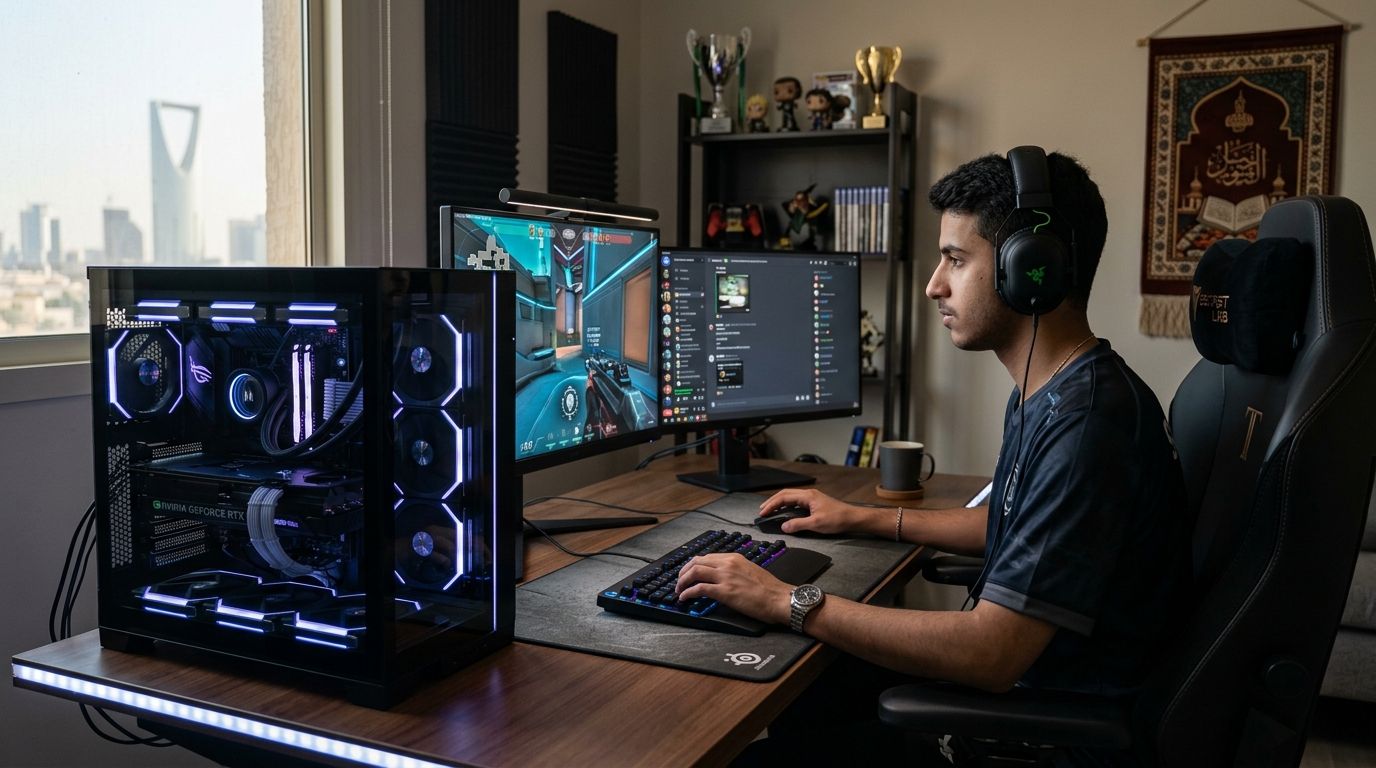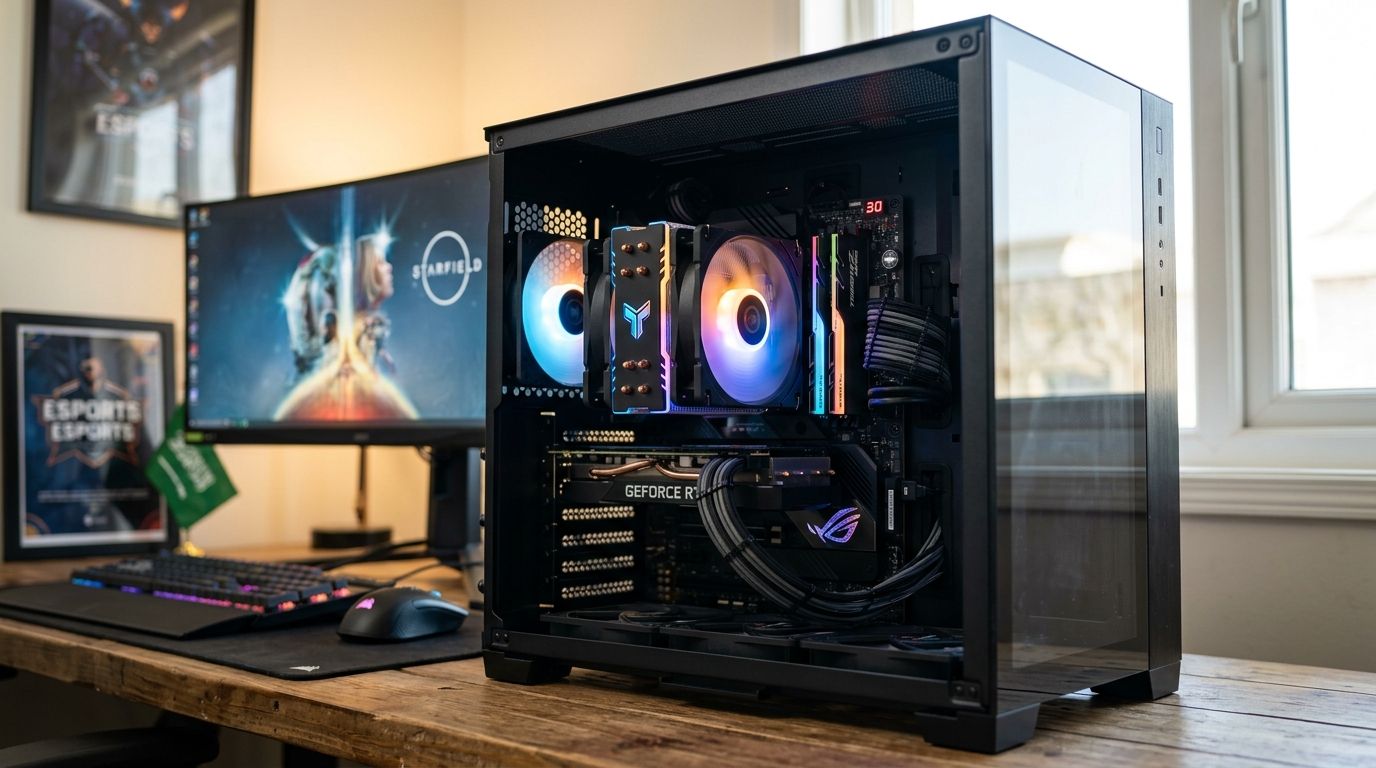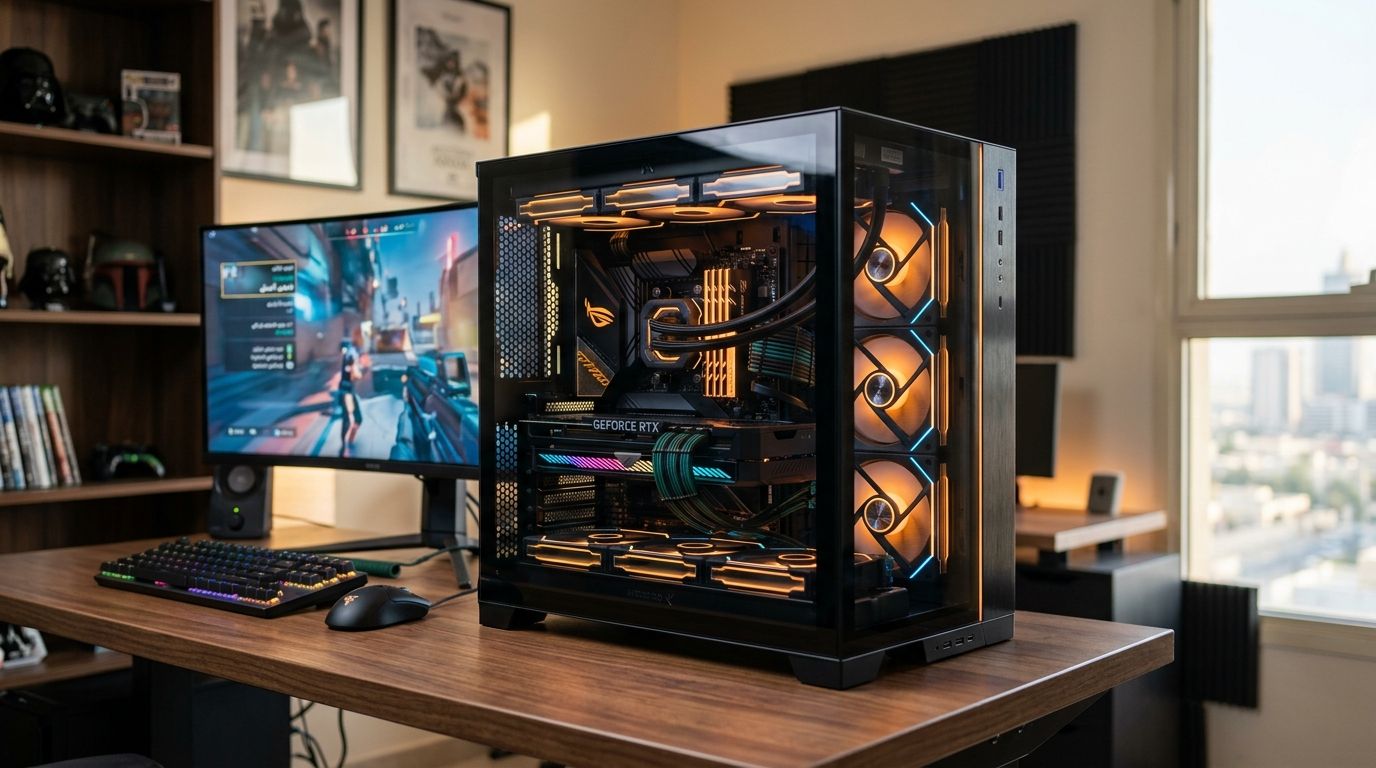
Picking a pc case for gaming build in 2026 comes down to matching airflow, GPU clearance, and radiator support to the components you're actually running — not chasing the case with the most RGB.
- A full-tower airflow case is the best pc case for gaming build setups running flagship GPUs that need over 300mm of clearance.
- Mid-tower ATX cases fit the widest range of gaming PCs sold in Saudi Arabia in 2026 without wasting desk space.
- Mini-ITX cases suit compact builds but cap radiator size at 240mm to 280mm in most shells.
- Sound-dampened cases cut fan and pump noise for streaming setups where microphone bleed matters.
- Budget micro-ATX cases work for entry-level gaming PCs but limit future GPU upgrades.
Why this matters
A case is the one component buyers treat as an afterthought, then regret. Thermal throttling from poor airflow shaves frame rates off a build that otherwise has the horsepower to hit them, and a case bought two sizes too small blocks the exact GPU upgrade a gamer wants in 12 months.
Gamerzone builds and ships custom and pre-built gaming PCs across gaming PC builds in Saudi Arabia, and case selection is one of the first calls made on every custom order — because it decides which motherboard size, GPU length, and cooling loop actually fit.
What makes the best pc case for gaming build
- Airflow design — mesh front panels and multiple intake fans beat solid glass fronts for sustained gaming loads
- GPU clearance — flagship cards now routinely exceed 300mm in length, so the case spec sheet has to confirm it
- Radiator and fan mount support — 360mm and 420mm top or front mounts matter if a liquid cooler is in the plan
- Cable management routing — dedicated channels behind the motherboard tray keep airflow clean and builds serviceable
- Front I/O and dust filtration — USB-C front ports and removable dust filters matter in Saudi Arabia's dustier climates
- Motherboard compatibility — ATX boards measure roughly 305mm x 244mm, Micro-ATX 244mm x 244mm, Mini-ITX 170mm x 170mm, and the case has to match
PC cases for gaming builds at a glance
| Case type | Best for | Standout feature | Key limitation |
|---|---|---|---|
| Full-tower airflow case | High-end GPU builds | Clears 300mm+ GPUs and 420mm radiators | Takes up significant desk footprint |
| Mid-tower ATX case | Balanced gaming builds | Fits most components without excess bulk | Limited room for triple-radiator loops |
| Mini-ITX SFF case | Compact desks | Smallest footprint for a full gaming rig | Caps radiator size near 240-280mm |
| Sound-dampened case | Quiet streaming setups | Foam-lined panels cut fan and pump noise | Dampening restricts airflow versus mesh |
| Tempered glass RGB case | Build showcases | Full side-panel visibility of components | Glass adds weight and blocks some venting |
| Micro-ATX budget case | Entry-level gaming PCs | Lowest-cost path to a working build | Fewer expansion slots for future upgrades |
1. Full-tower airflow case: best pc case for gaming build with high-end GPUs
A full-tower airflow case is built around mesh intake panels, three or more fan mounts, and enough internal depth to clear GPUs that stretch past 300mm. This is the shell for anyone running or planning to run a flagship card, since cramped cases force thermal throttling under sustained load regardless of how strong the GPU is.
Full-tower airflow case pros:
- Clears the longest GPUs on the market, including cards paired with RTX 5090 gaming PCs
- Supports 360mm and 420mm radiators for serious liquid cooling loops
- Multiple fan mounts keep intake and exhaust balanced
Full-tower airflow case cons:
- Footprint doesn't suit small desks or shared rooms
- Overkill for builds running mid-range GPUs
Best for: gamers building around a flagship GPU that needs real clearance and airflow. Verdict: Buy if the build includes a top-tier card; Skip for anything mid-range or lower.
2. Mid-tower ATX case: best pc case for gaming build balance
Mid-tower ATX cases are the default recommendation for most gaming PCs sold in Saudi Arabia in 2026, because they fit a full ATX motherboard, a mid-size GPU, and a 240mm or 280mm radiator without wasted volume. This is the shell most pre-built gaming PCs ship in, since it balances cooling, cost, and desk space.
Mid-tower ATX case pros:
- Fits the widest range of motherboards and GPUs on the market
- Reasonable footprint for a bedroom or office desk
- Enough fan mounts for solid airflow without a full-tower price
Mid-tower ATX case cons:
- Triple-radiator loops rarely fit without a case swap
- Cable routing is tighter than full-tower shells
Best for: the majority of custom and pre-built gaming PCs built in 2026. Verdict: Buy — this is the safest default pick for most builds.
3. Mini-ITX SFF case: best pc case for gaming build on a small desk
Mini-ITX small form factor cases squeeze a full gaming build into a shell that can sit next to a monitor instead of under a desk. The motherboard itself measures around 170mm x 170mm, and the case is built tightly around it, GPU, and a single radiator.
Mini-ITX SFF case pros:
- Smallest physical footprint for a genuinely capable gaming PC
- Easier to transport for LAN events or moving rooms
- Modern SFF designs still fit mid-range GPUs without trimming
Mini-ITX SFF case cons:
- Radiator support tops out near 240-280mm in most models
- Building and cable routing take more patience in tight clearances
Best for: gamers with limited desk space who still want a real gaming build. Verdict: Hold — great fit for the right desk, but confirm GPU clearance before ordering.
4. Sound-dampened case: best pc case for gaming build streaming setups
Sound-dampened cases line the front and side panels with foam material to cut fan and pump noise, which matters directly when a microphone sits a meter away from the tower. This is the shell streamers and anyone in a shared room reach for over a pure airflow design.
Sound-dampened case pros:
- Noticeably quieter under load than mesh-front alternatives
- Still supports a mid-size radiator and standard ATX board
- Solid panels double as a cleaner aesthetic for camera-visible setups
Sound-dampened case cons:
- Dampening foam restricts airflow versus an open mesh front
- Runs slightly warmer under sustained gaming loads than airflow cases
Best for: streamers and gamers in shared rooms who prioritize quiet over peak thermals. Verdict: Hold — pick this only if noise is the deciding factor over raw cooling headroom.
5. Tempered glass RGB case: best pc case for gaming build showcases
Tempered glass cases exist to show off the build, not to maximize airflow. Full side-panel glass paired with RGB fans and lighting turns the PC into a visible part of the setup, which is exactly what a chunk of buyers in 2026 are shopping for.
Tempered glass RGB case pros:
- Full visibility of components, cabling, and lighting
- Pairs well with RGB memory and cooling for a coordinated look
- Widely available across price points
Tempered glass RGB case cons:
- Glass panels block some venting compared to mesh fronts
- Added weight makes the case less practical to move often
Best for: gamers who want the build itself visible on stream or in photos. Verdict: Hold — fine as a secondary priority, not the case to pick on thermals alone.
6. Micro-ATX budget case: best pc case for gaming build entry points
Micro-ATX cases fit a 244mm x 244mm board and a compact GPU without the cost of a full-size shell. This is the practical starting point for a first gaming PC build, especially one built around an entry-level or mid-range card.
Micro-ATX budget case pros:
- Lowest-cost path to a working, upgradable gaming PC
- Compact enough for tight desks without going full SFF
- Enough room for a single radiator or basic air cooler
Micro-ATX budget case cons:
- Fewer expansion slots limit long-term upgrade paths
- Airflow is tighter than mid-tower or full-tower designs
Best for: first-time builders and anyone assembling a budget gaming PC in 2026. Verdict: Buy for entry builds; Wait if a GPU upgrade is planned within a year.
Build your gaming PC around the right case
Get a custom or pre-built gaming PC matched to your GPU and cooling needs.
How this list was ranked
Each case type was scored against the six criteria above — airflow, GPU clearance, radiator support, cable routing, front I/O, and motherboard fit — then matched to the specific gamer profile it serves best. No two entries compete for the same use case, which is why a full-tower and a Mini-ITX case can both rank without one beating the other outright.
Which pc case for gaming build should you choose?
Running a flagship GPU: buy the full-tower airflow case. Building a standard mid-range rig: buy the mid-tower ATX case — it's the safest default for 2026. Tight on desk space: hold for the Mini-ITX SFF case, but confirm GPU clearance first. Building on a budget with upgrade plans later: buy the micro-ATX case now, and plan the case swap alongside the GPU upgrade.
FAQ
What is the best pc case for gaming build in 2026?
A mid-tower ATX airflow case is the best pc case for gaming build setups running mid-range to high-end GPUs in 2026, since it balances clearance, cooling, and desk footprint. Full-tower cases only make sense once a flagship GPU is involved.
Does case size affect gaming PC performance?
Yes — a cramped case restricts airflow and causes thermal throttling under sustained gaming loads, which lowers sustained frame rates even on a powerful GPU. Case airflow design matters as much as fan count.
Is a mesh front panel better than tempered glass for gaming?
Mesh front panels move more air and run cooler under load than tempered glass panels, which restrict intake. Glass panels are chosen for visibility and aesthetics, not thermal performance.
What size radiator fits in a mid-tower case?
Most mid-tower ATX cases support 240mm or 280mm radiators in the front or top mount. Full-tower cases extend that to 360mm or 420mm depending on the model.
Can a Mini-ITX case run a high-end GPU?
Many Mini-ITX small form factor cases fit mid-range GPUs, but flagship cards exceeding 300mm often don't clear the shell. Check the case's maximum GPU length spec before buying a compact build.
How much clearance does a flagship GPU need in 2026?
Flagship GPUs in 2026 commonly exceed 300mm in length, so the case listing needs a confirmed maximum GPU clearance above that figure. Mid-range cards are shorter and fit a wider range of cases.
Are sound-dampened cases worse for cooling?
Sound-dampened cases run slightly warmer than mesh airflow cases because the foam lining restricts intake, but they're still viable for mid-range builds. The trade-off is quieter operation over peak thermal headroom.
What motherboard size fits a micro-ATX case?
Micro-ATX cases fit Micro-ATX boards measuring roughly 244mm x 244mm, and most also accept smaller Mini-ITX boards. They do not fit full ATX boards, which measure around 305mm x 244mm.
One last thing
The GPU clearance spec gets skipped more than any other line item on a case listing, and it's the one that actually voids an upgrade plan — measure the card, not just the case, before ordering either one in 2026.