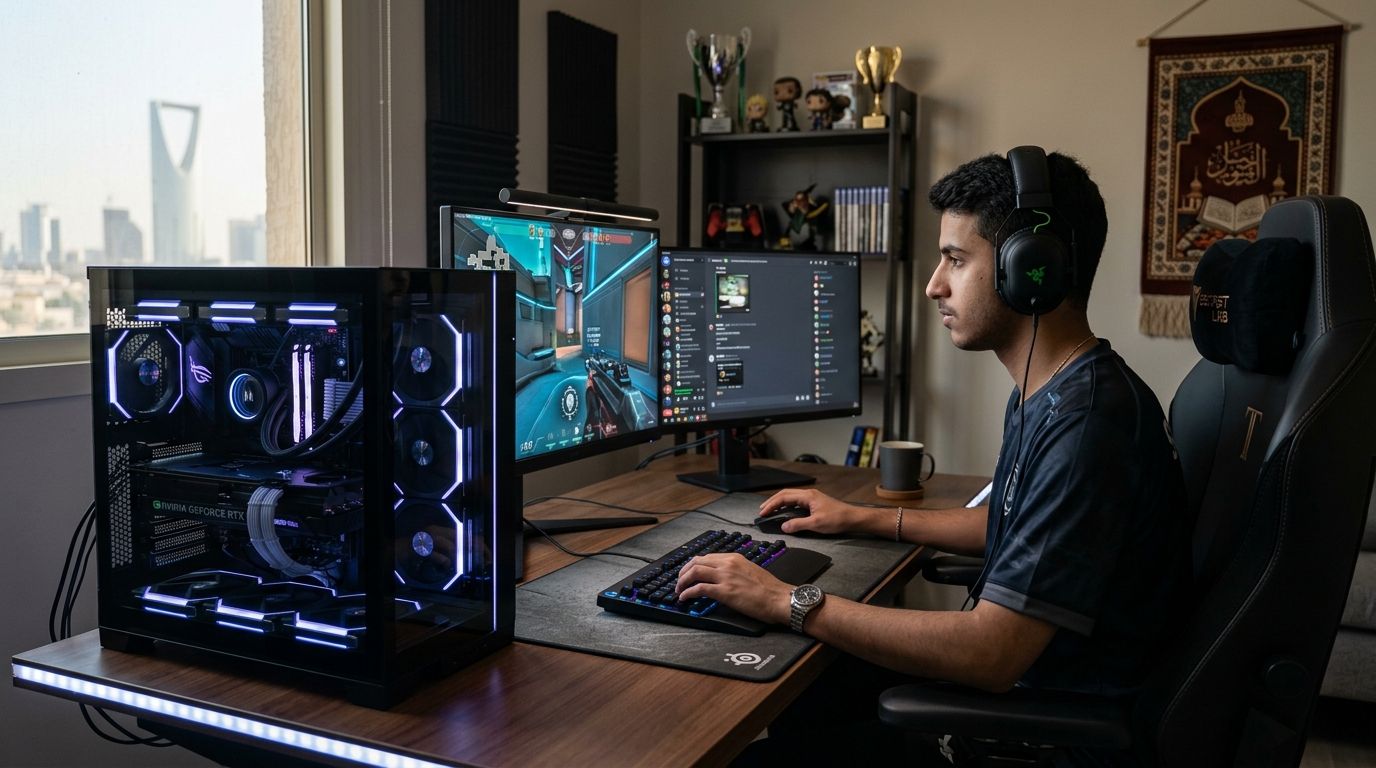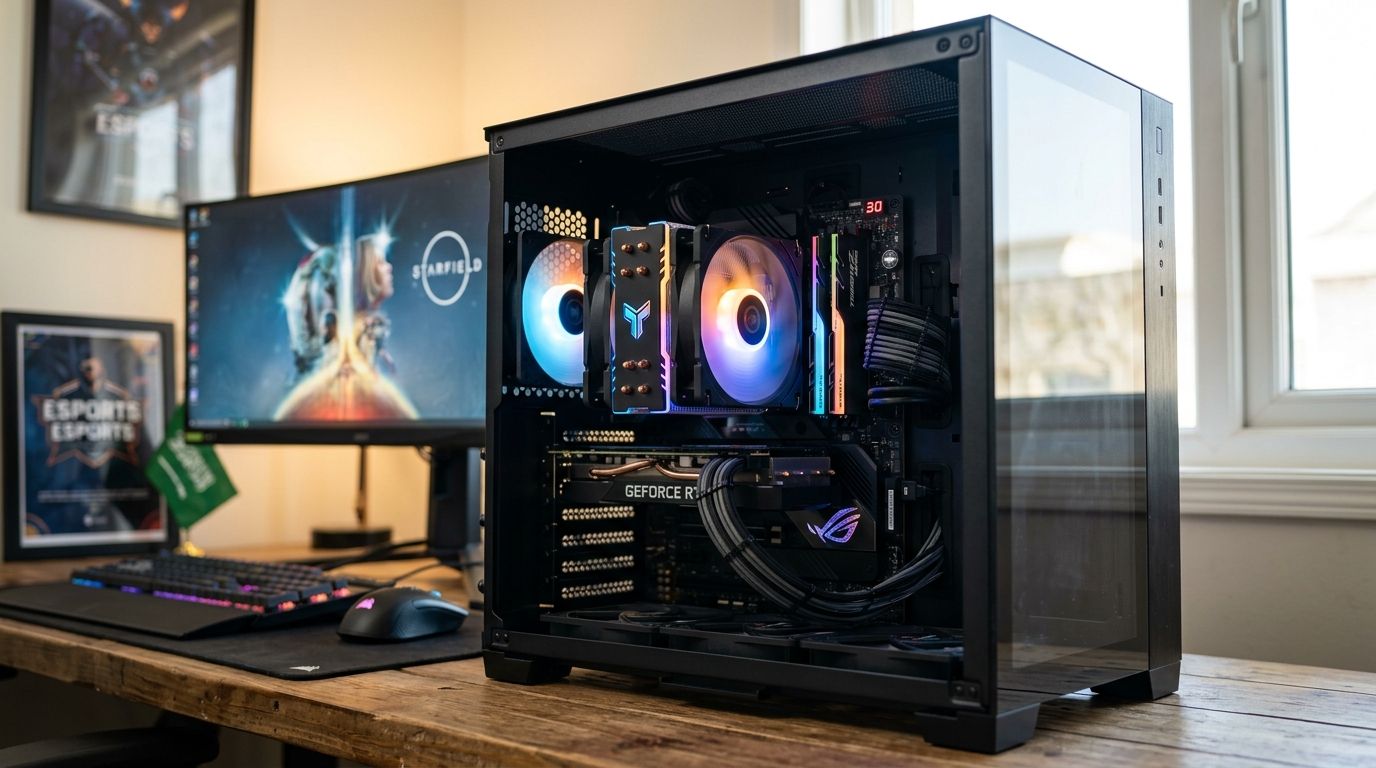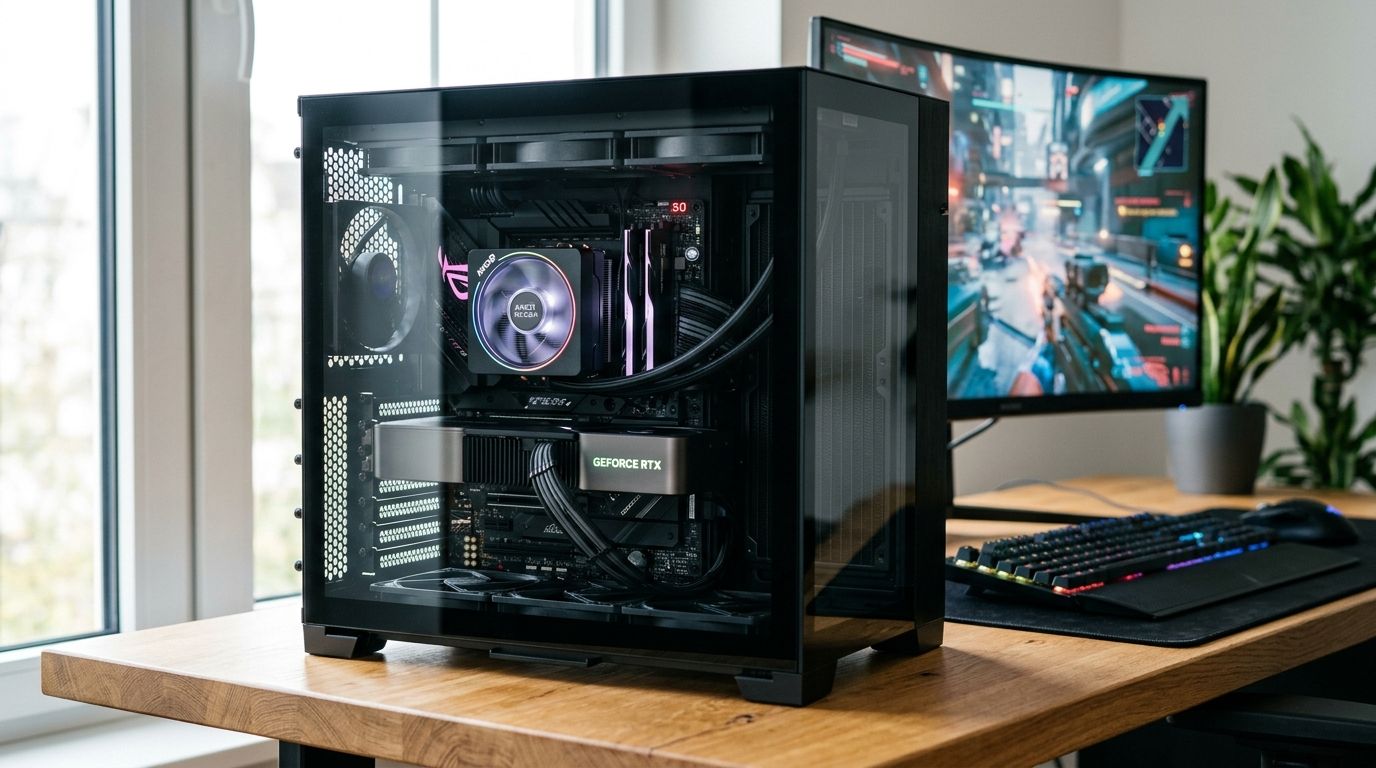
AMD's Ryzen lineup covers every gaming budget in Saudi Arabia right now, from six-core budget chips to 16-core hybrids built for gaming and streaming at once. This guide ranks the five Ryzen CPUs worth buying for gaming in 2026 and tells you exactly which one fits your build.
- The best Ryzen CPU for gaming in 2026 is the AMD Ryzen 7 9800X3D — 96MB of L3 cache and the highest 1080p/1440p FPS in the current lineup.
- AMD Ryzen 9 9950X3D adds 16 cores for gaming plus streaming or rendering, but only half its cores carry 3D V-Cache.
- AMD Ryzen 7 7800X3D remains a strong buy in 2026 for anyone who doesn't need the newest silicon.
- AMD Ryzen 5 9600X and Ryzen 5 7600 cover 1080p budget builds without paying for cache you won't use.
- Every chip on this list runs on AM5, so a single motherboard purchase covers upgrades for years.
Why this matters
Gaming FPS tracks cache and clock speed more than core count once you pass six cores, which is why a cheaper 8-core X3D chip regularly beats a pricier 16-core part in game benchmarks. Buying the wrong Ryzen CPU means paying for cores your games never touch, or bottlenecking a GPU you already own.
Gamerzone builds and ships custom gaming PCs across KSA, and CPU choice is the first decision every build spec starts from — check the current Gamerzone lineup before locking in a motherboard and cooler around your pick. Get the CPU right and the rest of the parts list falls into place fast.
What makes the best Ryzen CPU for gaming
- 3D V-Cache size — more L3 cache reduces trips to system RAM, which is the single biggest driver of 1% low FPS.
- Single-core boost clock — most game engines still lean on a handful of fast threads, not all of them.
- Core and thread count for your use case — 6 cores is enough for pure gaming; 12+ threads matter once you stream or render alongside a game.
- TDP and cooling demand — a 170W chip needs a serious cooler; a 65W chip runs on a mid-range air cooler.
- Socket and platform longevity — AM5 supports current and near-future Ryzen generations, protecting the motherboard investment.
- Price-to-performance at your resolution — a 4K-bound GPU rarely needs the fastest CPU on the market.
Best Ryzen CPUs for gaming in 2026 — at a glance
| CPU | Best for | Standout feature | Key limitation |
|---|---|---|---|
| AMD Ryzen 7 9800X3D | Overall gaming performance | 96MB 3D V-Cache, single CCD | Only 8 cores — thin for heavy multitasking |
| AMD Ryzen 9 9950X3D | Gaming plus streaming/rendering | 16 cores, one CCD with 3D V-Cache | Needs game-mode driver routing to hit peak FPS |
| AMD Ryzen 7 7800X3D | Best value, still current | Same 96MB cache as the 9800X3D | Older core architecture, lower boost clock |
| AMD Ryzen 5 9600X | Mainstream 1080p/1440p build | 6 cores at 65W without X3D premium | No 3D V-Cache — trails X3D chips in cache-heavy titles |
| AMD Ryzen 5 7600 | Budget entry gaming build | Lowest TDP on this list at 65W | Weakest multitasking headroom of the five |
1. AMD Ryzen 7 9800X3D: best overall gaming CPU
The Ryzen 7 9800X3D pairs 8 cores and 16 threads with 96MB of L3 cache stacked directly under the CPU die. That cache is why it posts the highest average and 1% low FPS of any chip on this list in CPU-bound titles at 1080p and 1440p. It runs on the AM5 socket, so it drops into any current AM5 motherboard without a platform change.
AMD Ryzen 7 9800X3D pros:
- Highest gaming FPS in the current Ryzen lineup
- Single CCD design avoids the core-routing issues seen on dual-CCD X3D chips
- Runs cooler than its 16-core siblings at similar boost clocks
- Drops into existing AM5 boards
AMD Ryzen 7 9800X3D cons:
- 8 cores is tight for heavy background streaming or rendering
- Commands a premium over non-X3D 8-core chips
Best for: gamers building a dedicated 1080p or 1440p rig with no serious multitasking demands. Verdict: Buy.
2. AMD Ryzen 9 9950X3D: best for gaming plus streaming
The Ryzen 9 9950X3D packs 16 cores and 32 threads across two CCDs, with 3D V-Cache stacked on only one of them. Games get routed to the cache-heavy CCD through AMD's chipset driver, while background encoding, streaming, or rendering runs on the second CCD. It's the only chip on this list that genuinely handles gaming and heavy production work in the same session.
AMD Ryzen 9 9950X3D pros:
- 16 cores handle streaming, rendering, and gaming simultaneously
- One CCD still delivers 9800X3D-class gaming cache
- AM5 platform, same socket as the rest of the lineup
AMD Ryzen 9 9950X3D cons:
- Needs the chipset driver active to route games correctly — misconfigured systems lose FPS
- 170W TDP demands a stronger cooler than the other four chips here
- Overkill for anyone who only games
Best for: streamers and content creators who game on the same machine they record or edit on. Check Gamerzone's gaming PC lineup for pre-built options already tuned around this chip. Verdict: Buy.
3. AMD Ryzen 7 7800X3D: best value pick still worth buying in 2026
The Ryzen 7 7800X3D shares the same 96MB L3 cache and 8-core/16-thread layout as its successor, just on an earlier core revision with a lower boost clock. In most game benchmarks it trails the 9800X3D by a small margin, not enough to matter for the average 1080p or 1440p player. It's still sold new in 2026 and remains the cheapest way into 3D V-Cache gaming performance.
AMD Ryzen 7 7800X3D pros:
- Same cache size as the newer 9800X3D
- Proven, widely benchmarked chip with mature motherboard support
- Lower boost clock means slightly easier cooling
AMD Ryzen 7 7800X3D cons:
- Loses a small FPS margin to the 9800X3D in the newest titles
- Being phased out as retailers prioritize the 9000-series
Best for: buyers who want X3D-class gaming FPS without waiting on newer stock. Pair it with a kit from Gamerzone's DDR5 RAM guide to avoid bottlenecking the cache advantage with slow memory. Verdict: Buy.
4. AMD Ryzen 5 9600X: best mainstream CPU without the X3D premium
The Ryzen 5 9600X runs 6 cores and 12 threads at 65W, built on the same core architecture as the 9800X3D but without the extra cache. It handles 1080p and most 1440p gaming comfortably when paired with a mid-range GPU, and its low TDP means a budget air cooler is enough.
AMD Ryzen 5 9600X pros:
- 65W TDP keeps cooling and power costs down
- Modern core architecture, faster per-core than older non-X3D chips
- AM5 socket, upgrade path to X3D later
AMD Ryzen 5 9600X cons:
- No 3D V-Cache — falls behind X3D chips in cache-sensitive titles like flight sims and strategy games
- 6 cores start to show their limits with heavy background apps
Best for: a mainstream 1080p/1440p build where the GPU, not the CPU, sets the frame rate ceiling. Verdict: Buy.
5. AMD Ryzen 5 7600: best budget entry gaming CPU
The Ryzen 5 7600 is the non-X variant with 6 cores, 12 threads, and the lowest TDP on this list at 65W. It's the entry point into the AM5 platform, giving a budget build the same upgrade path as every chip above it without paying for clock speed a budget GPU can't use anyway.
AMD Ryzen 5 7600 pros:
- Lowest power draw and cooling demand on this list
- Cheapest route into a current-generation AM5 platform
- Enough headroom for any mid-range GPU at 1080p
AMD Ryzen 5 7600 cons:
- Weakest multitasking headroom of the five chips ranked here
- No cache advantage — struggles more than the 9600X in the heaviest titles
Best for: a first gaming PC build on a tight budget where the GPU carries the frame rate. Verdict: Buy for budget builds, skip if you can stretch to the 9600X.
How we ranked these Ryzen CPUs
Each chip was weighed against the six criteria above — cache size mattered most for gaming FPS, followed by core count for the multitasking-heavy picks, then TDP and platform fit. The Ryzen 7 9800X3D wins on the cache-and-clock combination that games actually use; the Ryzen 9 9950X3D earns its spot by covering a use case the others can't — gaming while streaming or rendering.
“A CPU that maxes out your GPU at 1% lows is doing its job better than one with a bigger average FPS number.”
Which Ryzen CPU should you choose in 2026?
Default to the AMD Ryzen 7 9800X3D if you're building a dedicated gaming PC in 2026 and don't need it doing anything else — it's the highest-FPS chip on this list and drops onto any AM5 board. Step up to the Ryzen 9 9950X3D only if streaming, rendering, or heavy multitasking runs alongside your games. If budget is the deciding factor, the Ryzen 5 7600 gets you onto the AM5 platform today with room to upgrade to an X3D chip later without touching the motherboard.
FAQ
What is the best Ryzen CPU for gaming in 2026?
The AMD Ryzen 7 9800X3D is the best Ryzen CPU for gaming in 2026, thanks to its 96MB of 3D V-Cache and the highest FPS in the current lineup at 1080p and 1440p.
Is the Ryzen 7 9800X3D better than the Ryzen 9 9950X3D for gaming?
Yes, for pure gaming the 9800X3D edges ahead because all 8 of its cores sit under the 3D V-Cache. The 9950X3D only matches it in games once its scheduler routes work to the cache-heavy CCD correctly.
Do I need a Ryzen 9 CPU for gaming, or is Ryzen 7 enough?
Ryzen 7 is enough for gaming alone. Only move up to Ryzen 9 if you stream, render video, or run heavy background apps while gaming.
What is 3D V-Cache and why does it matter for gaming?
3D V-Cache is extra L3 cache stacked directly on the CPU die, cutting how often the chip has to fetch data from system RAM. Games with large open worlds or heavy AI calculations see the biggest FPS gains from it.
Is the Ryzen 7 7800X3D still worth buying in 2026?
Yes. It carries the same 96MB cache as the newer 9800X3D and loses only a small FPS margin, making it a solid value pick while it's still in stock.
Ryzen 5 9600X vs Ryzen 5 7600 - which is better for budget gaming?
The Ryzen 5 9600X has a newer core architecture and slightly higher per-core performance for a similar 65W TDP, making it the better pick when the price difference is small.
What motherboard socket do these Ryzen CPUs use?
All five CPUs in this guide use the AM5 socket, so one motherboard purchase covers upgrades across this entire lineup.
How much RAM do I need to pair with a Ryzen X3D CPU?
32GB of DDR5 at a mid-to-high speed rating is the practical baseline for X3D builds in 2026, since the extra cache performs best when it isn't waiting on slow memory.
One last thing
The Ryzen 9 9950X3D's split-CCD design trips up more buyers than any spec on this list: only one of its two chiplets carries the 3D V-Cache, and Windows needs its game-mode driver active to route titles to the correct cores. Skip that driver and the 9950X3D performs closer to a plain 16-core chip in games, erasing the reason to pick it over the 9800X3D in the first place.