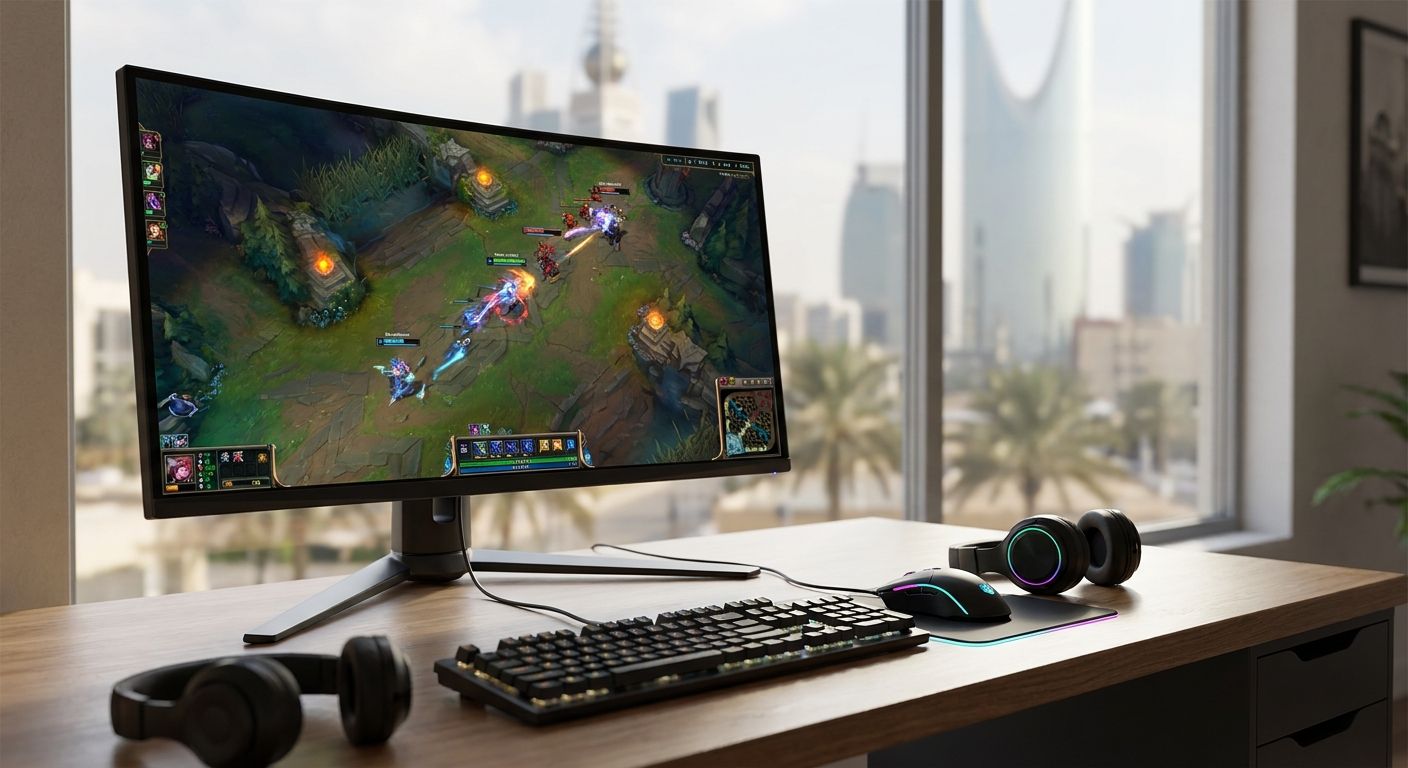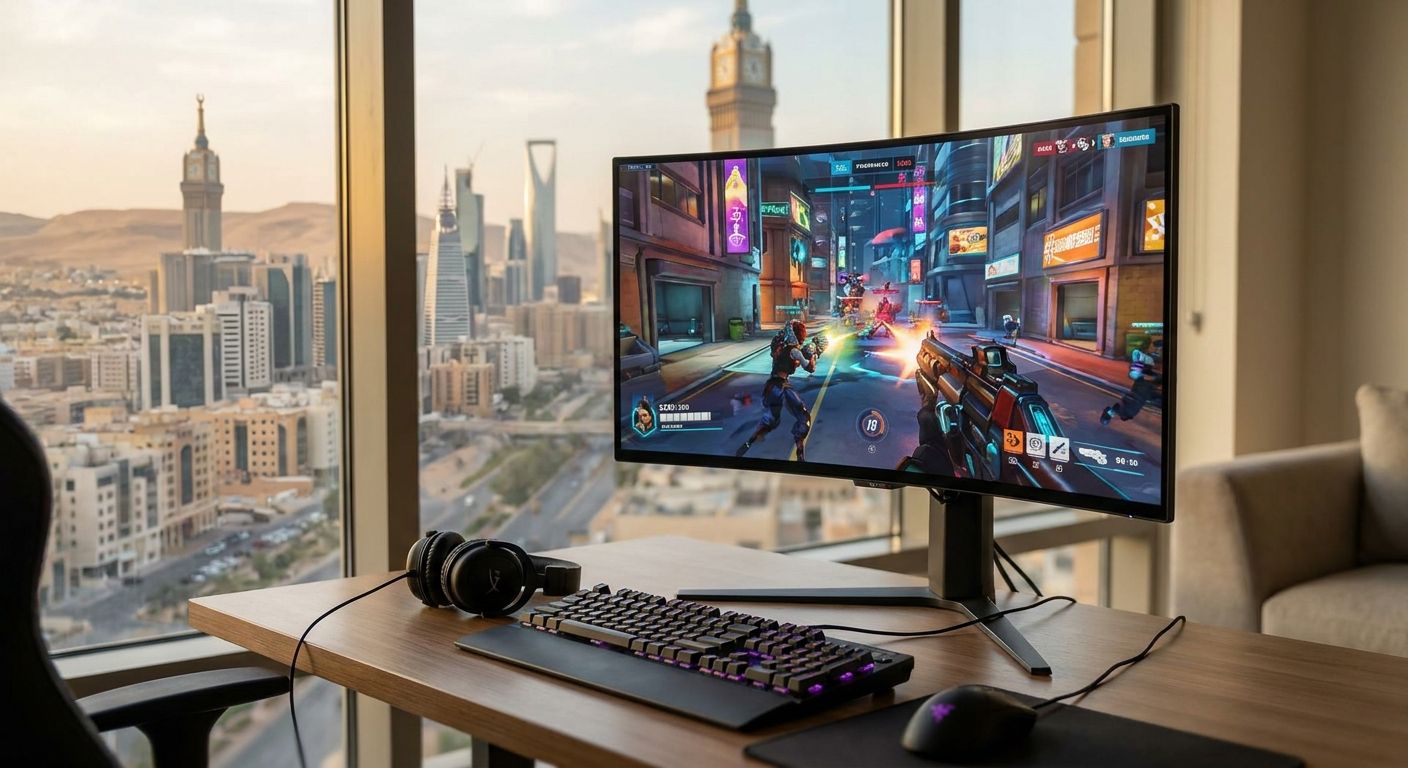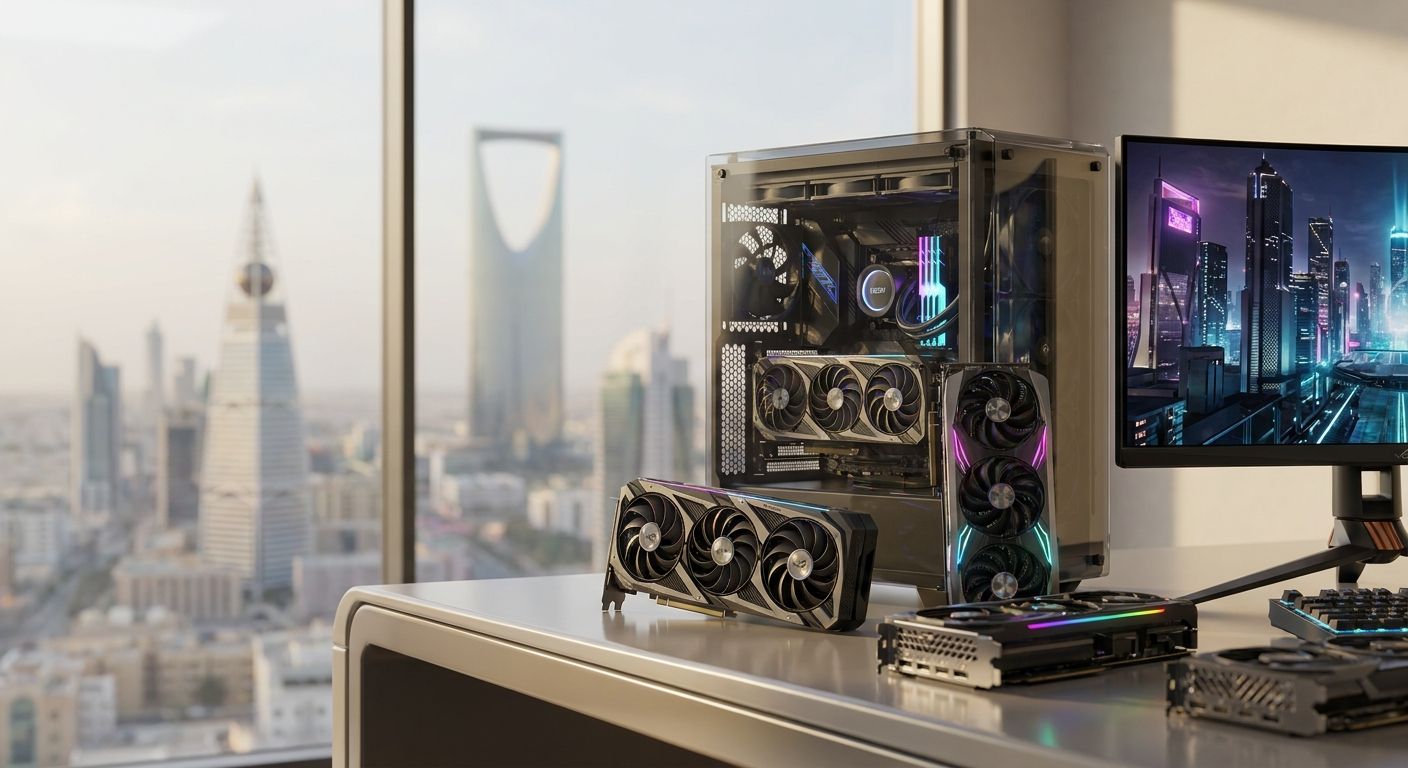
Picking the best gaming graphics card in Saudi Arabia in 2026 comes down to resolution, power budget, and whether you need extra VRAM for streaming or content work — this guide ranks seven cards by exactly those factors.
- NVIDIA RTX 4090 is the best gaming graphics card in Saudi Arabia overall for 4K and content creation in 2026.
- AMD Radeon RX 7900 XTX matches it on 24GB VRAM and wins for streaming-heavy rigs.
- NVIDIA RTX 4070 Super is the pick for 1440p gamers who want the best value tier, not the top tier.
- NVIDIA RTX 4060 stays the entry point for 1080p builds on a tighter power budget.
Why this matters
Graphics card demand in Saudi Arabia has shifted hard toward 1440p and 4K panels since 2024, and by 2026 most competitive titles expect at least 12GB of VRAM to run textures at high settings without stutter. Buying the wrong tier means either overspending on power a case can't cool, or under-buying a card that bottlenecks a new monitor within a year.
Gamerzone stocks the full range below across custom builds and standalone components, which makes this a straight compare-and-decide job rather than a guessing game. The rest of this guide breaks down which card fits which setup.
What makes the best graphics card
Before the ranking, here's what actually separates a good pick from a bad one in 2026:
- VRAM capacity and bus width — determines how long a card stays relevant as game textures grow
- Ray tracing and upscaling support — DLSS and FSR now decide real framerates in most AAA titles, not raw shader count
- Power draw and cooling headroom — a 450W card in a poorly ventilated case throttles regardless of specs
- Driver stability and software ecosystem — NVIDIA's tooling is more mature; AMD has closed most of the gap by 2026
- Price-to-performance tier — the fastest card is rarely the smartest buy for a given resolution
- Local availability and support in Saudi Arabia — matters for warranty claims and swap-outs
At a glance
| Card | Best For | Standout Feature | Key Limitation |
|---|---|---|---|
| NVIDIA RTX 4090 | 4K gaming and content creation | 24GB GDDR6X, ~16,384 CUDA cores | 450W draw needs serious case airflow |
| NVIDIA RTX 4080 Super | 1440p ultra-high-refresh gaming | 16GB GDDR6X, strong ray tracing | Overkill for 1080p setups |
| AMD Radeon RX 7900 XTX | Streaming and VRAM-heavy workloads | 24GB GDDR6 at a lower tier price point | FSR trails DLSS in some titles |
| NVIDIA RTX 4070 Super | 1440p value gaming | 12GB GDDR6X, 220W efficient draw | VRAM ceiling shows in 4K textures |
| AMD Radeon RX 7800 XT | 1080p high-refresh esports | 16GB GDDR6, strong 1080p/1440p frame rates | Less efficient than NVIDIA equivalents |
| NVIDIA RTX 4060 Ti | Compact small-form-factor builds | 165W draw fits small cases and PSUs | Mid-tier gains over standard 4060 |
| NVIDIA RTX 4060 | Budget 1080p entry builds | 115W draw, lowest power in this list | Struggles above 1080p in newer titles |
1. NVIDIA RTX 4090: best graphics card for 4K gaming and content creation
The RTX 4090 is Nvidia's Ada Lovelace flagship, built around 24GB of GDDR6X memory and roughly 16,384 CUDA cores. It's the only card on this list that treats native 4K at high refresh rates as a non-issue, and it doubles as a rendering workhorse for video editing or 3D work.
RTX 4090 pros:
- Handles 4K gaming at high settings without relying on upscaling
- 24GB VRAM covers demanding creative workloads, not just games
- Best-in-class ray tracing performance in 2026's AAA titles
RTX 4090 cons:
- 450W TDP demands a case with real airflow and a high-wattage PSU
- Massive overkill for 1080p or standard 1440p monitors
- Physically large — check case clearance before buying
RTX 4090 verdict: Buy — if the build includes a 4K monitor or serious rendering work, nothing else on this list competes.
2. NVIDIA RTX 4080 Super: best graphics card for 1440p ultra-high-refresh gaming
The 4080 Super sits a full tier below the 4090 on price-to-performance but keeps 16GB of GDDR6X and strong ray tracing headroom. It's built for gamers running 1440p monitors at 144Hz or higher who don't need 4K-grade muscle.
RTX 4080 Super pros:
- Runs 1440p at high refresh rates with room to spare
- 16GB VRAM covers most 2026 titles at max settings
- Lower power draw than the 4090 at 320W
RTX 4080 Super cons:
- Diminishing returns if the monitor is capped at 1080p
- Still a premium-tier card, not a value pick
RTX 4080 Super verdict: Buy — the sweet spot for anyone building around a 1440p 144Hz+ panel.
3. AMD Radeon RX 7900 XTX: best graphics card for streaming and VRAM-heavy workloads
AMD's RDNA3 flagship matches the RTX 4090 on VRAM at 24GB of GDDR6, which matters more than raw shader count when a rig is running a game, an encoder, and a browser overlay simultaneously for streaming.
RX 7900 XTX pros:
- 24GB VRAM handles game plus stream-encoding workloads without stutter
- Strong raw rasterization performance for non-ray-traced titles
- Typically sits below the RTX 4090's tier for similar VRAM
RX 7900 XTX cons:
- FSR upscaling still trails DLSS in image quality in several 2026 titles
- 355W draw needs the same cooling attention as high-end NVIDIA cards
RX 7900 XTX verdict: Buy — the strongest option for streamers who need VRAM headroom without paying flagship NVIDIA pricing tiers.
4. NVIDIA RTX 4070 Super: best graphics card for 1440p value gaming
The 4070 Super is where the price-to-performance curve bends in the buyer's favor. It runs 1440p comfortably at 220W, making it the easiest card on this list to build a quiet, efficient system around.
RTX 4070 Super pros:
- Strong 1440p performance at a fraction of flagship power draw
- DLSS support keeps frame rates high in demanding titles
- Efficient enough for smaller PSUs and quieter cooling setups
RTX 4070 Super cons:
- 12GB VRAM is fine now but shows its ceiling in some 2026 texture packs
- Not built for 4K gaming
RTX 4070 Super verdict: Buy — the card most 1440p gamers should actually buy instead of stretching for the 4080 Super.
5. AMD Radeon RX 7800 XT: best graphics card for 1080p high-refresh esports
Competitive shooters and MOBAs care about frame rate consistency more than ray tracing eye candy, and the RX 7800 XT's 16GB buffer keeps frame times stable at 1080p and 1440p in esports titles.
RX 7800 XT pros:
- High, consistent frame rates in competitive titles at 1080p and 1440p
- 16GB VRAM is generous for this performance tier
- Solid choice for high-refresh monitors paired with esports-focused builds
RX 7800 XT cons:
- Less power-efficient than NVIDIA's equivalent tier
- Ray tracing performance lags behind NVIDIA cards at the same tier
RX 7800 XT verdict: Buy — the pick for competitive gamers chasing frame rate over visual fidelity.
6. NVIDIA RTX 4060 Ti: best graphics card for compact small-form-factor builds
At 165W, the RTX 4060 Ti fits into compact cases and smaller PSUs where the 4070 Super or above simply won't run cool or won't fit physically.
RTX 4060 Ti pros:
- Low 165W draw suits small-form-factor and mini-ITX builds
- Handles 1080p and light 1440p gaming with DLSS support
- Compact card size across most manufacturer variants
RTX 4060 Ti cons:
- Modest gains over the standard RTX 4060 for the jump in tier
- Not the right choice if 1440p high-refresh is the actual goal
RTX 4060 Ti verdict: Hold — buy it specifically for a small-case build, otherwise the 4070 Super gives more for a similar power envelope.
7. NVIDIA RTX 4060: best graphics card for budget 1080p entry builds
The RTX 4060 draws just 115W, the lowest on this list, and covers 1080p gaming at high settings without needing a PSU upgrade in an existing rig.
RTX 4060 pros:
- Lowest power draw in this lineup at 115W
- Handles 1080p gaming comfortably with DLSS support
- Fits into most existing PSUs without an upgrade
RTX 4060 cons:
- Struggles in newer 2026 titles pushed past 1080p or with heavy ray tracing
- 8GB VRAM is the tightest ceiling on this list
RTX 4060 verdict: Buy — the right entry point for a first gaming PC or a budget-capped upgrade, not for anything beyond 1080p.
How we ranked
Each card above was placed against the six criteria listed earlier — VRAM, ray tracing support, power draw, driver ecosystem, price-to-performance tier, and local support in Saudi Arabia — and matched to the resolution and use case where it wins outright rather than competes. That's why no two cards on this list share a "best for" label.
“The fastest card on paper is rarely the smartest buy for the monitor actually sitting on the desk.”
Which graphics card should you choose?
For most builders in 2026, the decision tree is simple: 4K or content work means the RTX 4090, 1440p high-refresh means the RTX 4080 Super or RTX 4070 Super depending on budget tier, and 1080p builds should default to the RTX 4060 or RTX 4060 Ti for small cases. Streamers and heavy multitaskers should lean toward the RX 7900 XTX for its VRAM headroom over raw shader speed.
If there's genuinely no strong opinion on resolution yet, the RTX 4070 Super is the safest default — it covers 1440p cleanly, runs efficiently at 220W, and doesn't force a PSU or case upgrade.
Compare graphics cards before you buy
See current stock and full builds across the lineup.
FAQ
What is the best gaming graphics card in Saudi Arabia in 2026?
The NVIDIA RTX 4090 is the best overall gaming graphics card in Saudi Arabia in 2026 for 4K gaming and content creation, thanks to its 24GB of GDDR6X memory. For most 1440p gamers, the RTX 4070 Super is the smarter value pick.
Is the RTX 4090 or RTX 7900 XTX better for streaming?
The RX 7900 XTX and RTX 4090 both offer 24GB of VRAM, which matters most for streaming with heavy encoding loads. The RX 7900 XTX typically costs less at that VRAM tier, making it the stronger streaming-specific pick.
How much VRAM does a graphics card need in 2026?
12GB is the practical minimum for 1440p gaming at high settings in 2026, and 16GB or more is recommended for 4K or content creation workloads. Cards with 8GB, like the RTX 4060, are best kept to 1080p.
What's the best graphics card for 1080p gaming?
The NVIDIA RTX 4060 is the best 1080p entry-level graphics card in 2026, drawing just 115W while handling high settings comfortably. The RTX 4060 Ti is the step up for small-form-factor builds that still want headroom.
Do I need a new power supply for a high-end GPU?
Cards like the RTX 4090 draw up to 450W and need a PSU with headroom well above that figure for the full system. Lower-tier cards like the RTX 4060 at 115W usually run fine on existing PSUs in older builds.
Is AMD or NVIDIA better for ray tracing?
NVIDIA cards generally hold a ray tracing performance edge over AMD's RDNA3 lineup in 2026 titles, with DLSS also outperforming FSR in several games. AMD cards like the RX 7900 XTX still compete strongly on raw rasterization and VRAM.
What graphics card is best for esports titles?
The AMD Radeon RX 7800 XT is the best pick for 1080p and 1440p esports gaming in 2026, delivering consistent high frame rates without needing flagship-tier power draw.
One last thing
The biggest mistake builders make in 2026 isn't picking the wrong brand — it's mismatching VRAM to their actual monitor. An RTX 4090 paired with a 1080p 60Hz screen wastes most of its 24GB buffer, while an 8GB RTX 4060 pushed onto a 1440p ultrawide will stutter in texture-heavy scenes within a year. Match the card to the monitor first, then worry about the brand.